
How to Choose a New Sofa: The Ultimate Guide
This post may contain affiliate links. If you make a purchase through one of my links, I may make a small profit at no expense to you. For further information, please view my policies.
Buying a new sofa is one of the biggest furniture decisions you’ll make so it can definitely feel overwhelming. With so many styles, sizes, and fabrics to choose from, it’s easy to get stuck.
In this guide, I’ll share practical tips to help you choose the perfect sofa for your home, whether you’re shopping online or in-store.

Tips and tricks to pick the perfect sofa for your space
So, you want to know how to choose a sofa – but wow, there are so many options out there. From mid-century to modern farmhouse, from sectionals to loveseats… how do you even begin to figure out what works in your space?
What if it doesn’t even fit through the door when it arrives?! (Been there. Not fun. 😒)
What if it’s uncomfortable? Or you fall out of love with the style in two years?
How are you supposed to buy a big-ticket item like a sofa online, without sitting on it first?!?
O.M.G. 🤯🤯🤯
These are all totally valid concerns when you’re shopping for a new couch – but don’t worry. It doesn’t have to be stressful!
In this post, I’m sharing my favorite tips and tricks to help you find the perfect sofa for your home, no matter the size, style, or layout you’re working with.
Look at Sofa inspiration
Let’s kick off this sofa-shopping journey the fun way – by looking at sofa inspiration! I genuinely love this part 😍
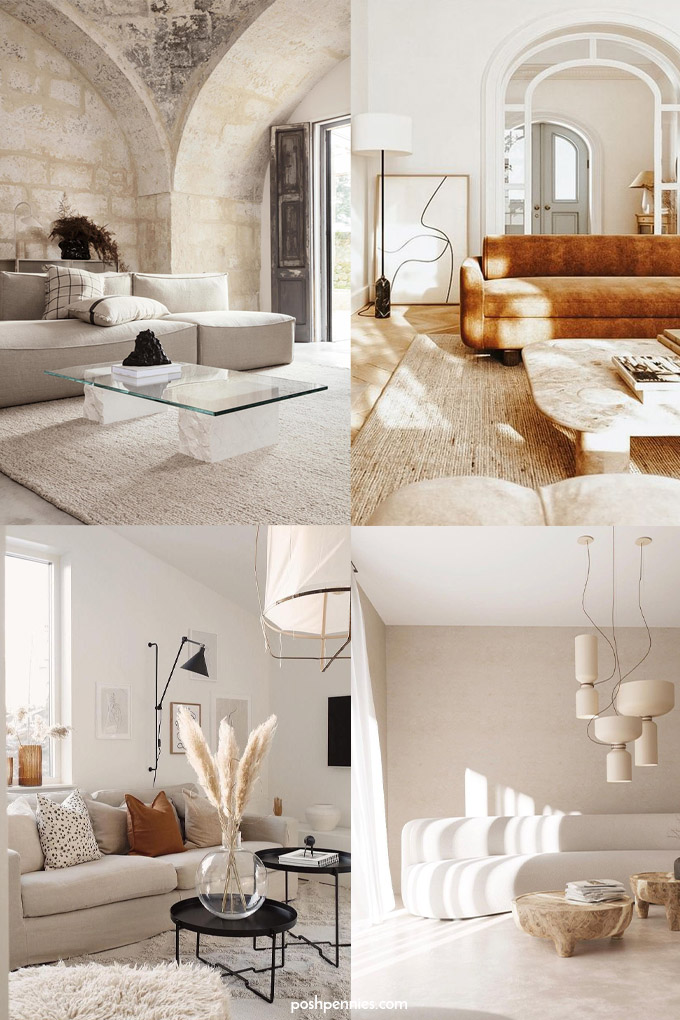
If you’re not sure how to choose a sofa or where to begin, browsing inspiration photos is the perfect first step. It helps you figure out what styles you’re drawn to and what might work best in your home.
Not sure whether you prefer modern or traditional? Curious about upholstered vs. leather sofas? Want to see how a deep green velvet couch looks in real-life living rooms? Scrolling through curated spaces can give you a much clearer idea of what you want – and what you don’t.
Sofas come in all shapes and sizes, from spacious sectionals to compact loveseats. Start by asking yourself a few simple questions:
- What general look do I want?
- Do I prefer fabric or leather?
- Is there a specific color or tone I’m going for?
- Am I following a particular interior design style or color scheme?
Even if you have no clue what you’re looking for yet, this step will help you narrow down your sofa style and start visualizing it in your space.
(Don’t worry, I’ve got a full section below that breaks down the different sofa styles.)
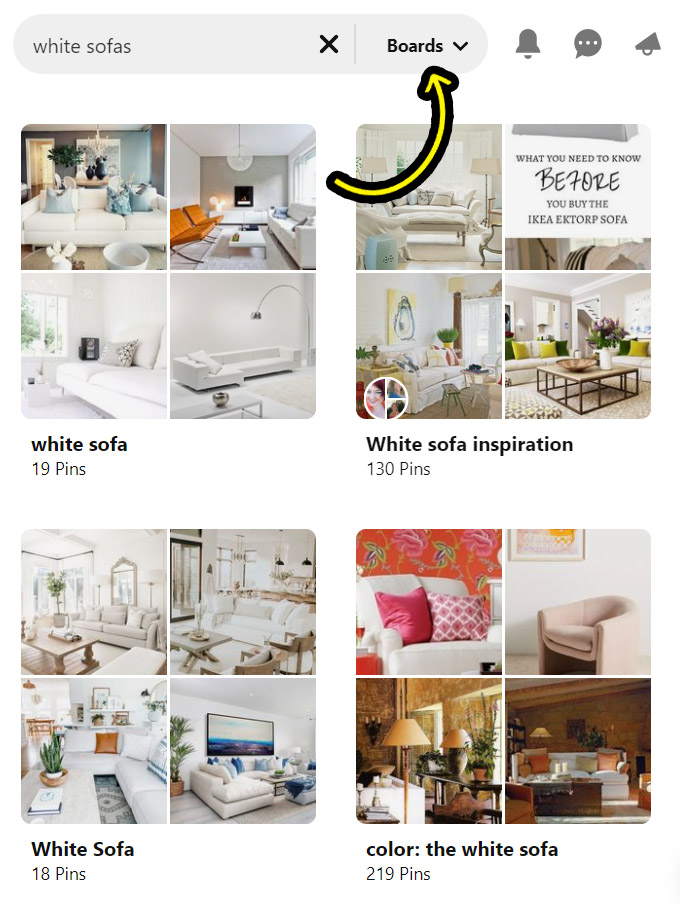
Pinterest is an amazing place to explore sofa design ideas and see how different styles look in real-life spaces. You’ll find tons of beautifully staged living rooms that can help spark your own vision.
Try searching for specific terms like white modular sofa or green velvet sofa to narrow things down – otherwise Pinterest can feel a bit overwhelming 😯
Also, don’t forget to search by boards! You’ll often find curated collections that others have already put together (yay, less work for you). Bonus: Pinterest doesn’t flood you with ads when you’re viewing people’s boards – at least, not yet…
👉 & of course don’t forget to follow me on Pinterest for more interior inspiration! 😁
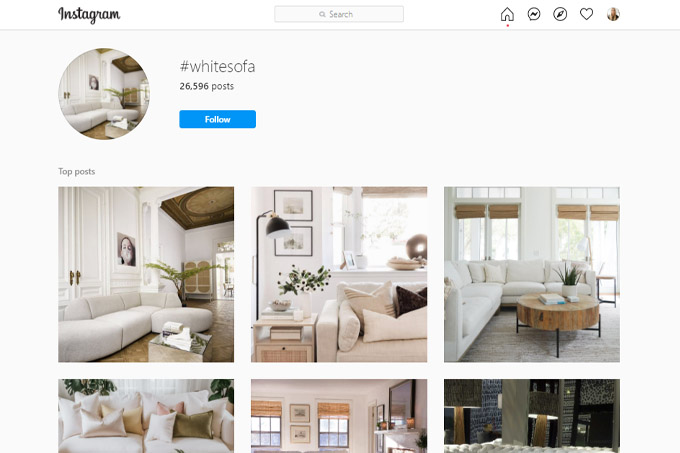
Instagram is another go-to for finding real-life sofa styling ideas.
If you’re not already following interior designers or home influencers, just try browsing hashtags like:
- #sofainspo
- #livingroomdecor
- #sofadesign
- #designerdecor
You’ll fall right down the Instagram rabbit hole in no time 🤣
Instagram is especially great for seeing how people mix sofas with pillows, rugs, side tables, and decor in everyday homes – not just staged photoshoots.
Retailer photography
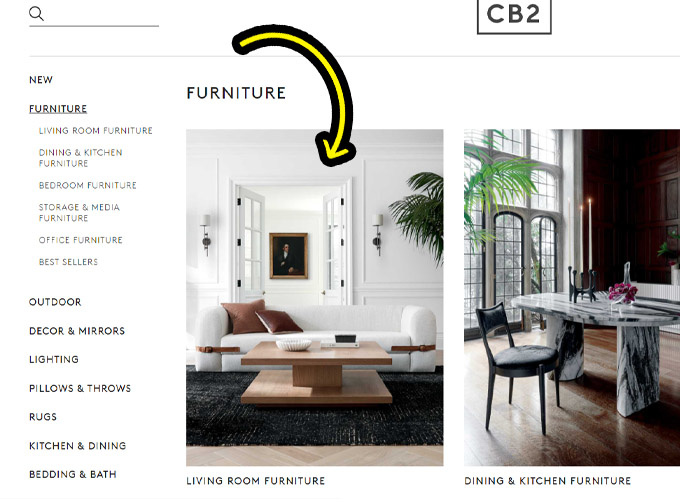
Another great way to gather inspiration is to check out your favorite furniture brands online. Most retailers feature staged product photos that showcase their sofas in beautifully styled rooms – and these setups can be super helpful for visualizing your own space.
For example, I really like how CB2 styles their sofas. Their product photos always feel intentional and elevated, which makes it easier to picture how different sofa shapes, fabrics, and colors might work in a real living room.
Browsing these photos can also give you a better sense of scale – seeing how a sofa looks next to a coffee table or accent chair can help you choose the right size and layout for your home.
Style
When it comes to choosing a sofa, knowing what style you’re after is key. Is your space more traditional or more modern? Do you lean toward clean lines and minimal shapes, or do you love something a bit more decorative?
Think about the details:
Are you a rolled arms kind of person, or do you prefer sleek track arms? Do you like tufted backs, deep seats, or tapered legs?
The sofa style you choose will have a big impact on the overall look and feel of your living room – it helps set the tone for the rest of your furniture and decor.
Below is a quick visual breakdown of some of the most popular sofa styles. It’s not exhaustive (I left out things like chaise longues and settees), but it gives you a solid starting point to explore what might work best for your home.
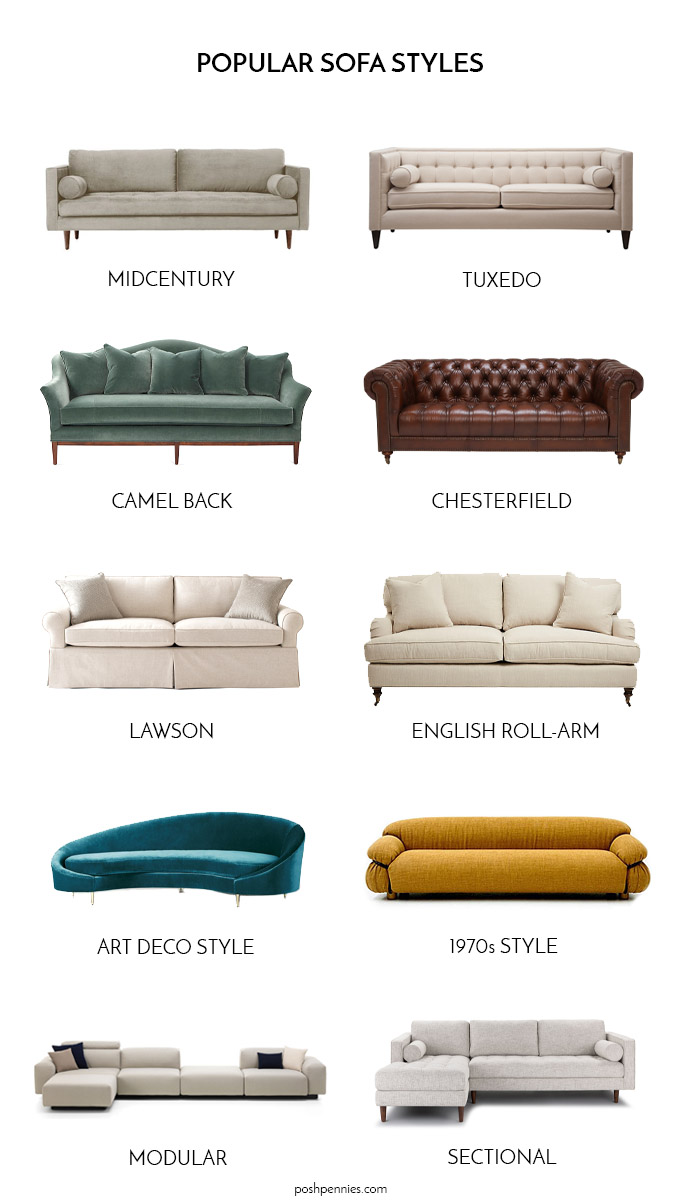
Confused about interior design styles? Check out this article!
Since you’re here, I’ll give you my personal opinion. haha. If you’re not sure what direction to go in, I usually recommend sticking with a streamlined, simple sofa. Think clean lines, minimal detailing, and nothing too wild like heavy tufting or overly ornate arms.
Why? Because if you choose a neutral, versatile sofa, it’ll be way easier to update your room later – whether your taste evolves or you just feel like switching up your decor without replacing your couch.
Budget: How Much Should You Spend On a Sofa?
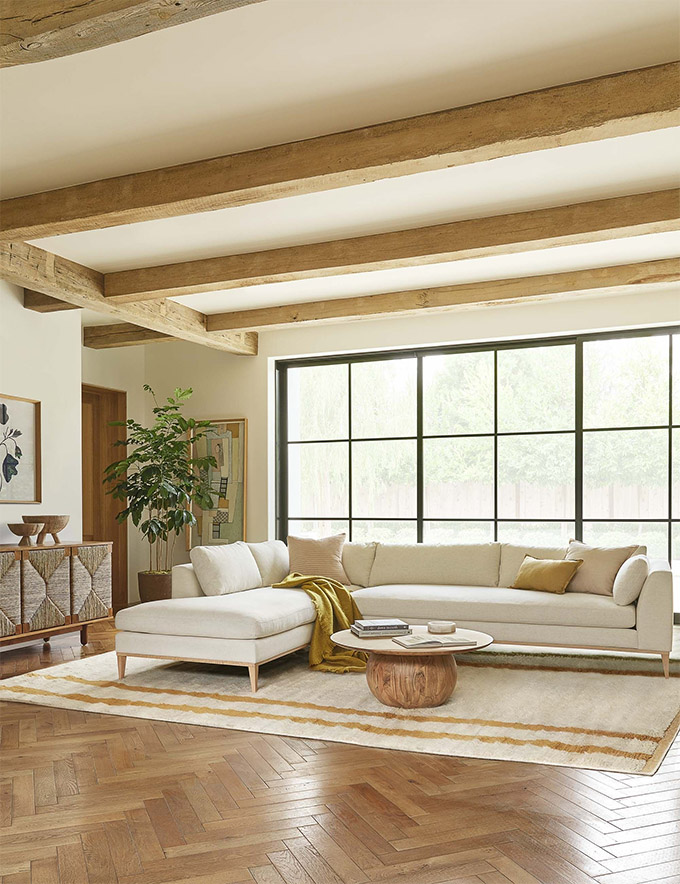
Once you’ve figured out your style, the next big question is: how much should you spend on a sofa?
Setting a budget is an essential step in finding the perfect couch – because our sofa dreams need to match our actual bank account, right? 😂 There’s a huge range of prices out there, and thankfully, sofas exist at nearly every price point.
Depending on the look, size, and quality you’re going for, you might spend anywhere from $500 to $5000 USD or more. So let’s break it down.
Think about the features that matter most to you:
- Is durability important?
- Do you want real leather or a performance fabric?
- Are you aiming for something long-lasting, or is this more of a temporary piece?
Realistically, I think most people should budget around $2000 USD for a beautiful, well-made sofa that’ll last for years.
Here’s a quick guide to help you understand what to expect at different sofa price ranges:
$500–$1000: Budget-Friendly Sofas
💰 Sofas in this range are usually mass-produced and made with lower-cost materials like particleboard frames or synthetic fabrics.
A few years ago, design options were… pretty meh. But thankfully, things have improved! Today, you can find some stylish pieces in this bracket – just don’t expect heirloom quality.
Great for: First apartments, temporary setups, or ultra-tight budgets.
$1000 – $2000: Mid-Range Sofas
💰💰 This is the sweet spot for many people. At this price point, you’ll start seeing better upholstery options, including real leather and higher-quality fabrics. Frame construction and comfort also improve.
Many popular mid-range sofa brands fall into this category – it’s become the industry standard for balancing price and durability.
Great for: Long-term use, everyday lounging, and getting both comfort and style.
$2000 – $4000: High-Quality Sofas
💰💰💰 In this range, you’re getting into premium materials like top grain leather, velvet, or performance fabrics. The build quality – from the frame to the cushions – is noticeably better.
You’ll also see more variety in sofa shapes and sizes, and finishes tend to feel more luxe.
Great for: Design lovers, families, or anyone investing in a statement piece that’ll last.
$5000 and Up: Luxury Sofas
💰💰💰💰 Welcome to the luxury tier. Think brands like Poltrona Frau or Restoration Hardware. Here, you’re paying for craftsmanship, custom options, and premium materials like authentic silk, wool blends, and solid hardwood frames.
That said, price doesn’t always equal quality – so if possible, test the sofa in person before committing. (Not so easy if you’re buying online, I know – I’ve got more tips on that coming up!)
Great for: High-end homes, custom interiors, or people who want to invest in a showstopper.
Dimensions: Will It Actually Fit?
There is nothing more soul-crushing than ordering your dream sofa online… only to realize it doesn’t fit the way you thought it would in your living room – or worse, it won’t even make it through your front door. 😭
One of the most important steps in choosing a sofa is measuring your space and understanding how the sofa’s dimensions will work in your home. Seriously – don’t skip this!
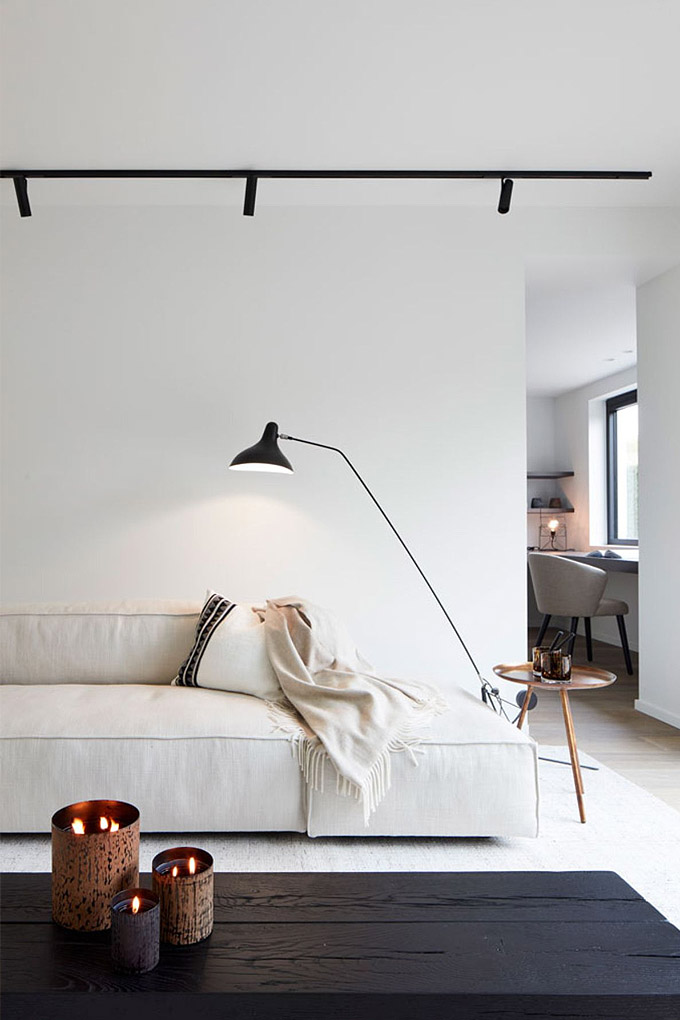
Key Sofa Size and Scale Considerations
Before you fall in love with a couch, ask yourself:
- 📏 Do I know the dimensions of my space?
Measure the area where your sofa will go – and don’t forget doorways, staircases, and tight corners if it needs to be delivered! - 🧍♂️🧍♀️ How many people will typically use this sofa?
If it’s just you (or you and a partner), a smaller sofa or loveseat may be perfect. Larger families or social spaces may need more seating. - 🛋️ Should I get a sectional or a standard sofa?
Sectionals are great for lounging and bigger spaces – just make sure you know whether you need a left-facing or right-facing configuration. - 😴 Do I want to nap or sleep on it?
If yes, make sure the seat depth and overall length are suitable for stretching out.
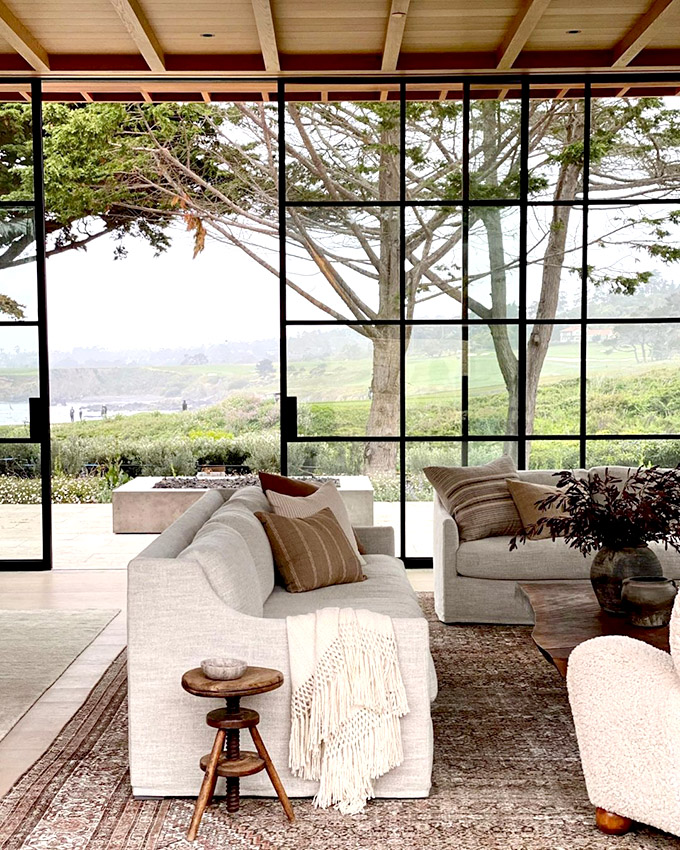
What Size Sofa Should You Get?
The answer is… it depends! (I know, I know 😅)
Here’s a general guide based on room size:
🏠 Large Rooms
If your space is open and airy, don’t undersize your sofa. A standard 84″ (213 cm) sofa may work, but you might want to go even bigger. In spacious rooms, larger sofas or sectionals help fill the space and create a cozy, grounded feel.
🛋️ Small Spaces
In smaller or more intimate spaces, go for something closer to 72″–76″. Furniture tends to feel bigger in compact rooms, so keeping your sofa in proportion is key.
Proportions Matter
Your sofa should feel balanced in relation to the other furniture in the room – coffee tables, rugs, armchairs, etc. If the sofa is too big or too small, it can throw off the entire vibe.
Also consider how wide and deep you want the sofa to be. A cozy two-seater might be perfect for you and your dog, but if you entertain often or have a big household, you may need more generous seating options – maybe even two full-sized sofas facing each other if your layout allows.
💡 Pro Tip: Tape It Out
Before I committed to my last sofa, I used blue painter’s tape on the floor to mark out its dimensions. It gave me a super realistic idea of how it would sit in the space – and I highly recommend doing the same. It’s such a simple way to avoid future heartbreak.
What color sofa should I choose?
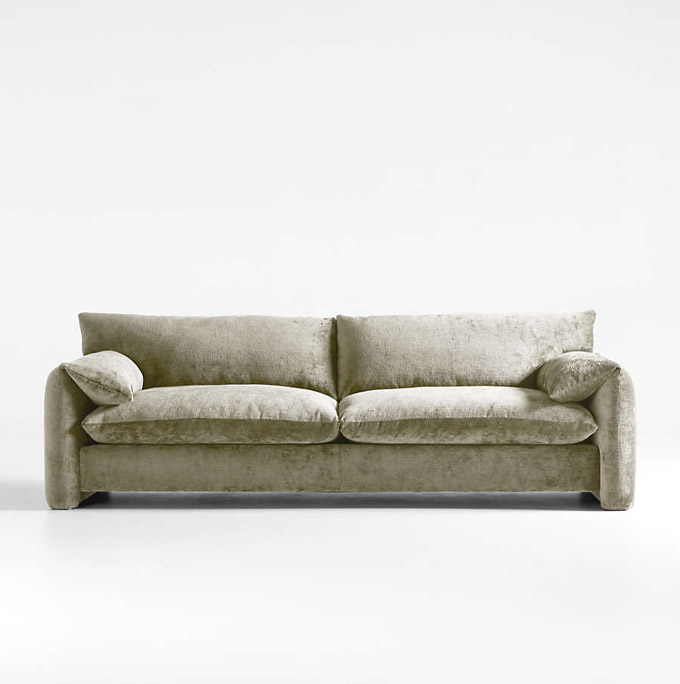
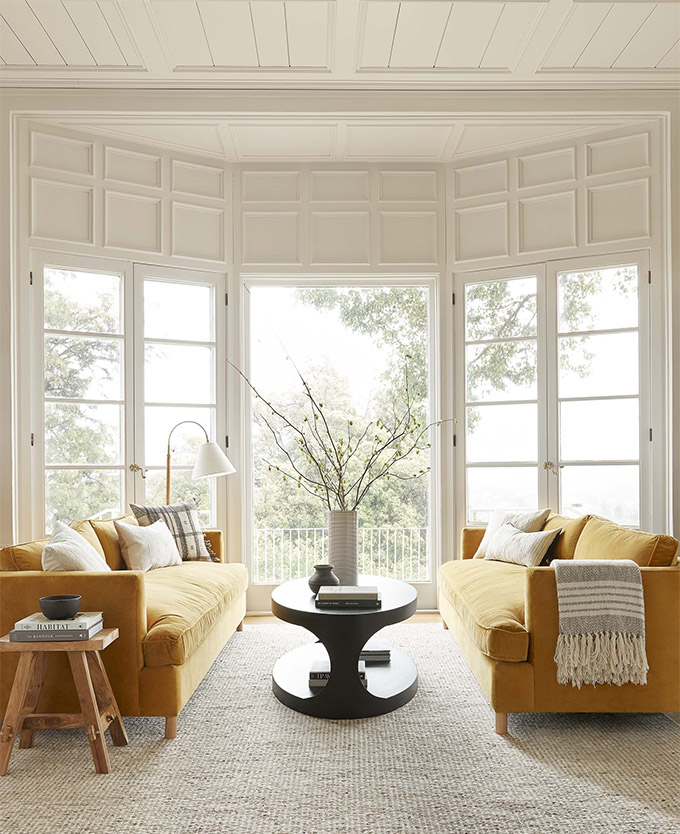
When it comes to choosing a sofa color, it’s all about personal preference! Your sofa sets the tone for your entire living room, so it’s worth thinking about what kind of vibe you want to create.
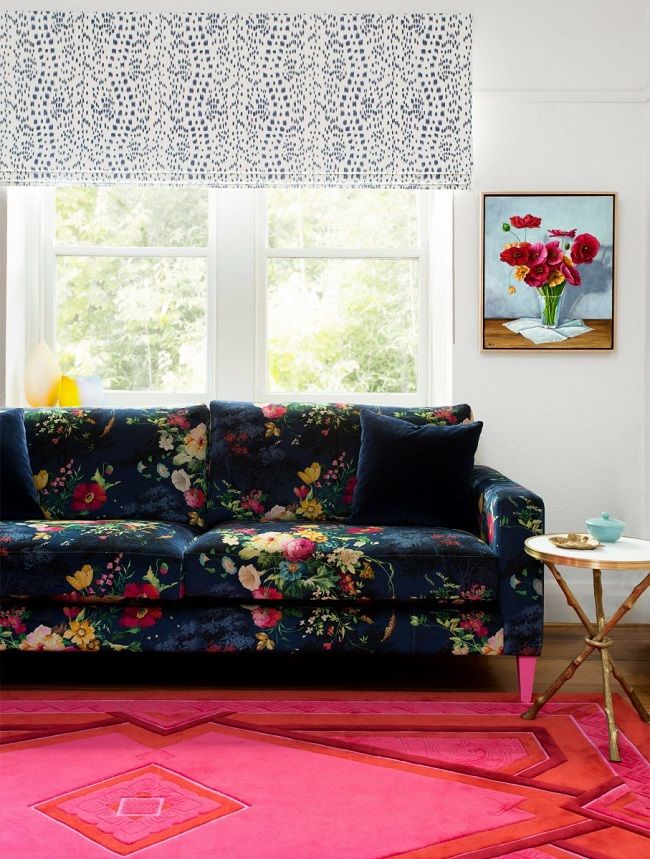
Looking to make a bold statement? A hot pink or mustard yellow sofa might be perfect. Want a calming, grounded space? Consider something in an earthy green or cool-toned blue.
These days, the sky’s the limit when it comes to sofa color options – and that’s part of the fun!
For example, I love the colorful sofa in Gray Benko’s home (custom sectional is $17,534 and called the “Neval” from Celadon). It’s bold, fun, and totally her vibe – but I know it wouldn’t work in my space. Still, I love gawking at how she styled it in her gorgeous, personality-filled home!
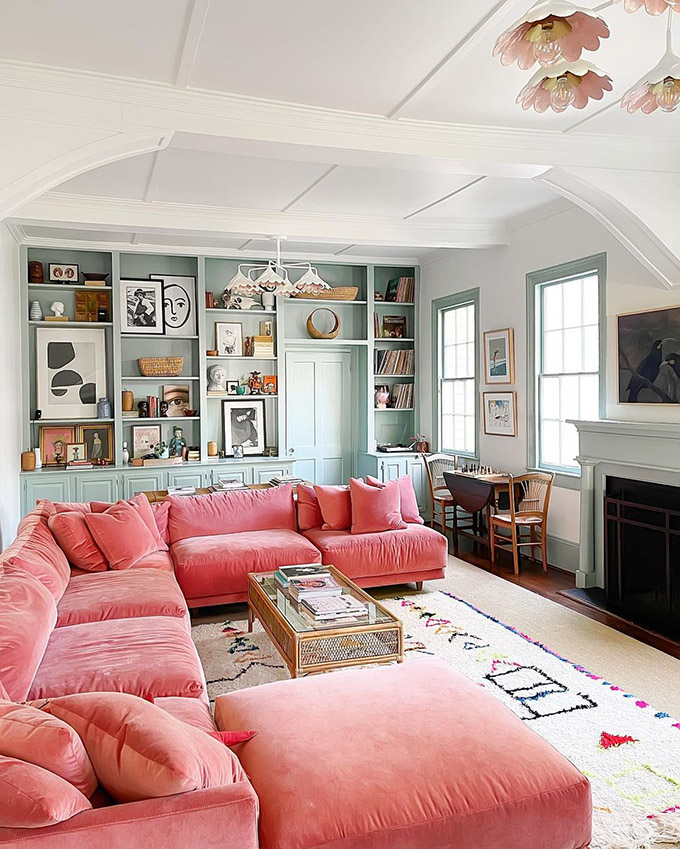
Should You Go Bold or Neutral?
While bold colors can be stunning, neutral sofas are often the safest and most versatile choice – especially if you’re someone who likes to change up your decor over time.
Personally? I always go with a solid, light neutral color. No wild patterns or bright shades for me – mostly because I know I won’t be swapping out my sofa every couple of years. I need a piece that’s going to go the distance and play nicely with whatever color palette I’m into next year.
If you’re thinking about a white sofa, a slipcovered version can be a smart move. Slipcovers are usually machine-washable and easier to keep looking fresh – a big win if you have pets, kids, or snack-loving friends.
Neutral sofas will generally always work really well and will look classy.
Pro Tip: Order Free Swatches!
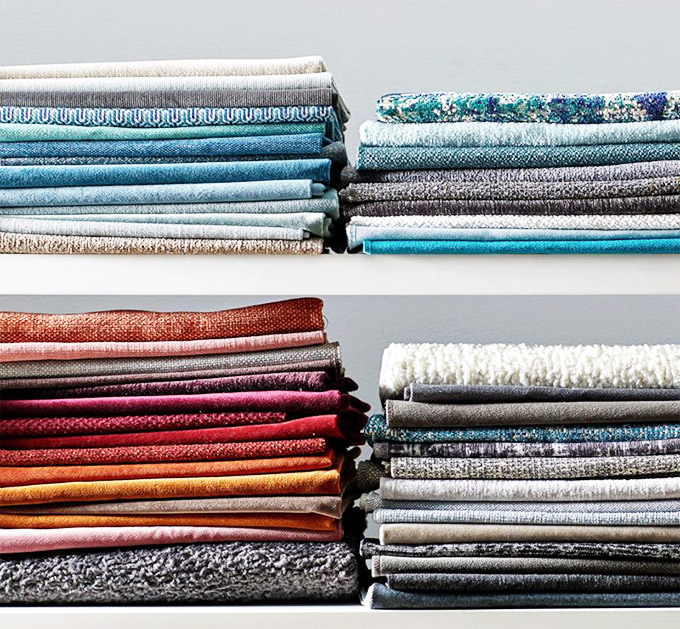
Whether you’re leaning bold or playing it safe, always order swatches before committing. Most retailers offer them for free (or super cheap), and they let you see how the fabric looks in your actual space – in different lighting, next to your walls, and with the rest of your furniture.
And don’t be shy – order as many as you need before pulling the trigger. You’ll thank yourself later!
Seat Comfort: Cushions, Depth, and Fillings
First up: seat cushion style. Do you want a classic three-cushion setup, or are you more into a bench cushion (one long cushion across the whole seat)? Personally, I love the look of a bench cushion – it’s clean, modern, and cozy without those annoying gaps between cushions.
Here’s an example that I love of a sofa with a single cushion:
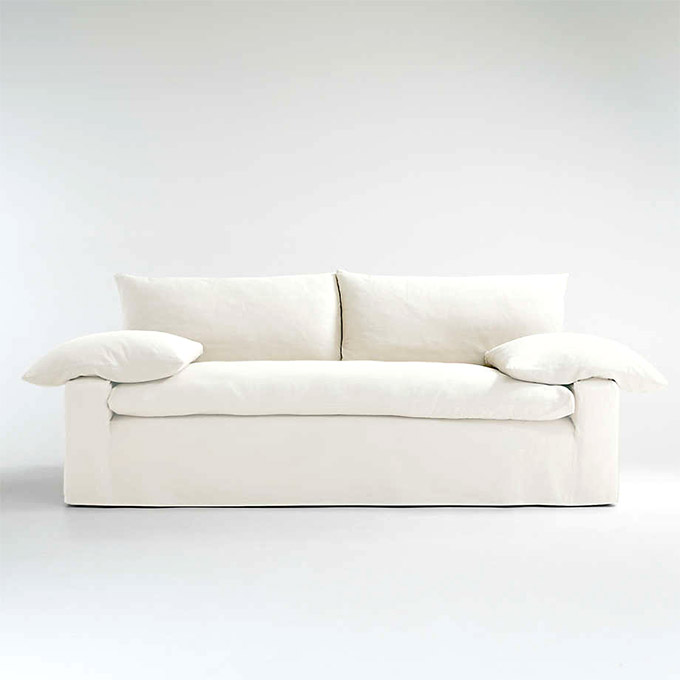
Whatever you choose, make sure the fabric feels good against your skin. No scratchy textures or super-slippery fabrics if you plan on spending a lot of time sitting (or napping) on it.
👉 If you have allergies, keep an eye on cushion materials – certain natural fibers or fills can cause issues for sensitive folks.
Seat Depth & Height: Find Your Fit
Seat depth and height play a big role in comfort – and they’re super personal. What feels perfect for one person might feel awkward for another.
- Taller folks might prefer a deeper seat so their knees don’t feel squished at the edge.
- Shorter folks might like a shallower seat to avoid having their feet dangle.
That said, I’m a shorty, and I LOVE our deep sofa sooooo…. 😁For record, we have the 93″ Lounge Sofa from Crate & Barrel and it’s SO GOOD! Side note – this sofa disguises little kitten claw marks flawlessly – just a note if you’re a cat person!
One perk of a deep sofa? It can double as a guest bed in a pinch – ideal for small spaces or apartment living!

Filling: What’s Inside Matters
Time to talk about what’s inside the cushions.
- Down-filled cushions are usually the plushest and most luxurious. They’re soft, cozy, and cloud-like… but also pricey.
- Foam-filled cushions are firmer, more affordable, and hold their shape well.
- Polyester fiber is another common fill – it’s soft and budget-friendly, but may compress more quickly over time.
If you’re on a budget and want something durable, foam or polyfill is a great place to start. If you want that ultimate lounge-on-a-cloud feeling (and you don’t mind fluffing cushions), down-filled might be worth the splurge.
What’s the difference between modular and sectional sofas?
Ever wondered about the difference between a modular sofa and a sectional sofa? You’re not alone – these terms get tossed around a lot, and while they sound similar, they’re actually quite different.
Both modular and sectional sofas are made up of multiple connected pieces, but the key difference is flexibility.
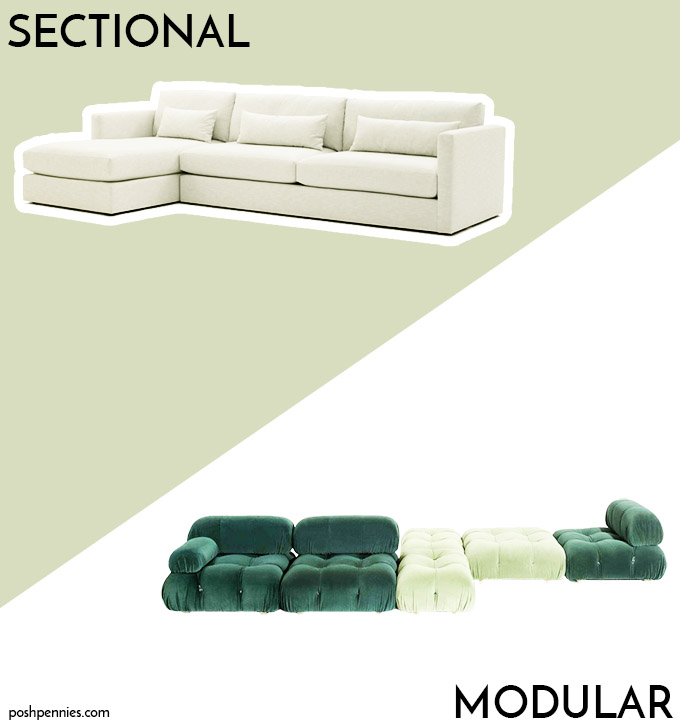
Sectional Sofas: Set Layout, Less Flexibility
A sectional sofa usually comes in a fixed configuration – most often a sofa or loveseat paired with a chaise, giving you that familiar L-shaped layout. Some sectionals also come in a U-shape with three connected pieces.
The important thing to know about sectionals is: what you see is what you get. The chaise is attached on one side, and unless it’s reversible (some are!), you can’t change the layout once it’s set up. This can be limiting if you move or want to rearrange your space later.
Modular Sofas: Endless Configuration Possibilities
Modular sofas are made up of individual units – or “modules” – that can be arranged however you want. They might include armless seats, corner pieces, ottomans, and more. You can build a modular sofa into an L-shape, U-shape, or even break it apart into separate seating areas.
Because the pieces are fully reconfigurable, modular sofas are ideal for people who:
- Love changing up their room layout
- Live in small or awkwardly shaped spaces
- Move often and want flexibility
So Which One Should You Choose?
- ✅ Choose a modular sofa if you want flexibility and love the idea of rearranging your setup over time.
- ✅ Choose a sectional sofa if you’re happy with a set layout and don’t plan on moving things around much.
TL;DR: Modular = customizable. Sectional = classic and fixed.
Fabric and Materials: What Should Your Sofa Be Made Of?
The material your sofa is made from plays a huge role in its durability, comfort, and maintenance needs. From leather to linen, and bouclé to velvet, each option has its own pros and cons – especially depending on your lifestyle (kids, pets, snack habits… all of it 😅).
Let’s break down some of the most popular sofa upholstery materials and what you should know before making a decision.
Leather
Genuine leather is durable, stylish, and ages beautifully. It’s typically more expensive, but it can last for decades with minimal upkeep. In theory, leather requires conditioning, protection from mold and mildew, and careful stain removal with things like baking soda paste or saddle soap.
Full disclosure: I didn’t do any of that with my leather couch and it still looked like a million bucks. I resold that sofa for the same price I had bought it for originally 😎
Pros:
- Extremely durable
- Great for homes with pets (it doesn’t trap hair or smells)
- Cool in summer
Cons:
- Can feel cold in winter
- Throw pillows love to slide off
- Pricier than fabric
- A little sticky if you’re sweaty (just being real)
Faux Leather
Faux leather is a budget-friendly alternative to the real thing, but it’s far less durable. Over time, it can crack and flake, ruining the look of your sofa.
If you’re going faux, know that it’s more about the look than the longevity.
Fabric
Fabric sofas come in endless options – from cotton twill and linen blends to microfiber velvet. They tend to be softer and warmer than leather, which makes them feel cozier for everyday lounging.
Pros:
- Tons of colors and textures available
- Generally more affordable than leather
- Often warmer and softer
Cons:
- Can trap allergens and odors
- Not as durable for pets or young kids (unless you choose a performance fabric)
Polyester & Cotton Blends (Microfiber)
These synthetic fabrics are durable, easy to clean, and typically lower-cost. Great for families or pet owners because spills don’t soak in as quickly.
Pros:
- Budget-friendly
- Easy to maintain
- Resistant to stains
Cons:
- Can feel a little less luxe
- May not wear as beautifully over time as natural fibers
💡 Note: Performance fabrics (like Crypton or Sunbrella) fall under this category – I cover them later in the “pets and kids” section!
Velvet
Velvet sofas = instant glam. They’re elegant, soft, and rich-looking – but they need some upkeep.
Pros:
- Luxurious look and feel
- Adds depth and texture to a room
Cons:
- Requires regular vacuuming
- Prone to wear, fading, and pressure marks
- Cotton velvet is delicate – go for synthetic velvet if you have kids or pets
FAN OF VELVET? THEN CHECK OUT THESE 12 GORGEOUS VELVET SOFAS!
Linen
Linen sofas offer that relaxed, organic vibe. Linen is a natural fiber, soft and breathable, but not always the most durable for high-traffic homes.
Pros:
- Light, airy, and cozy
- Natural texture that looks beautiful in casual or coastal-style rooms
Cons:
- Wrinkles easily
- More delicate than synthetic options
- Can wear down faster with heavy use
Bouclé
Bouclé is having a major moment – it’s nubby, chic, and textured, usually made from wool or synthetic blends.
Pros:
- Trendy and super stylish
- Unique texture adds interest to a room
Cons:
- Not ideal for homes with pets or young kids (those loops love claws and crumbs!)
- Harder to clean than smooth fabrics
Slipcovers
Slipcovers are the unsung heroes of sofa maintenance. They’re perfect if you want to update your look or disguise a tired old couch.
Pros:
- Easy to wash
- Great for homes with pets or kids
- Budget-friendly way to protect your sofa
Cons:
- Can look slightly more casual
- May need adjusting often to keep them tidy
Sofa Frame Build: What’s Inside Really Counts
Want to know if a sofa is actually high quality? Start by looking at its frame construction.
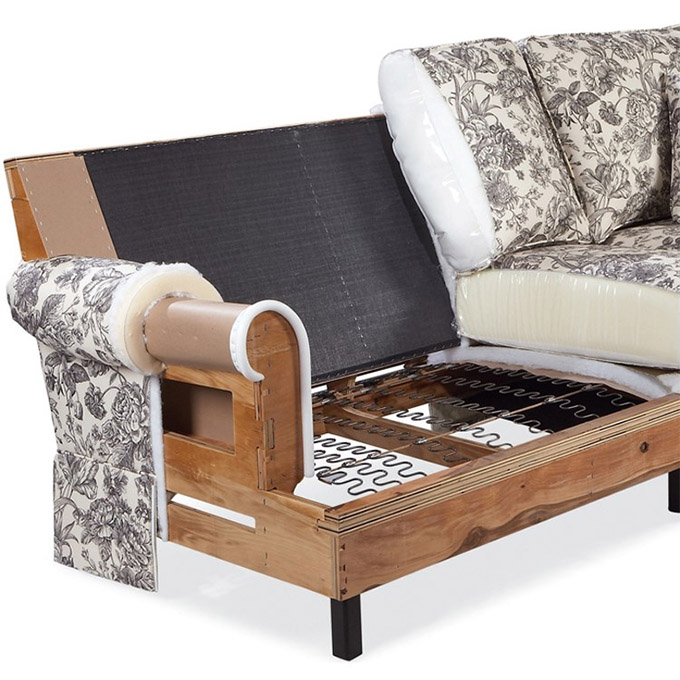
A sofa’s frame is what gives it structure, support, and longevity – and not all frames are created equal. Here’s what you need to know:
Types of Sofa Frame Materials
Sofa frames can be made from:
- Solid wood (best)
- Particleboard or MDF (avoid)
- Metal
- Even plastic (😬)
For a durable, long-lasting sofa, you’ll want to choose one with a solid wood frame – ideally not chipboard, MDF, or anything vague like “engineered wood” (which often means compressed materials that can warp or break).
Best Wood for Sofa Frames
The gold standard? Kiln-dried hardwoods like:
- Oak
- Beech
- Ash
Kiln-drying removes moisture from the wood, which helps prevent warping and cracking over time. These hardwoods are sturdy, reliable, and built to last.
A quick note on pine: While it’s common in lower-priced sofas, pine is a softwood, and over time it can warp, sag, or lose stability – especially with heavy use.
💡 If the retailer doesn’t specify what kind of wood they use in their sofa frames, that’s a red flag. Transparency = quality.
Tips for Buying a Sofa Online

Shopping for a sofa in person is ideal – but let’s be real: most of us are doing it online these days. And yes, it can feel a little scary to buy a big-ticket item like a sofa without sitting on it first. (Been there. More than once.)
So, what should you consider before clicking “add to cart”? Here are my top tips for buying a sofa online without regrets:
1. Read the Reviews
I highly recommend reading customer reviews – they’re one of your best tools when shopping online. Year ago when I wrote my post on the Article Sven sofa dupe, I basically became a review-reading detective. 🕵️♀️
Here’s what to look for in reviews:
- Shipping time and delivery experience
- Whether the product matched the photos/descriptions
- Build quality and comfort level
- If the dimensions were accurate
- Reports of damage or defects
- How easy (or painful) returns or replacements were
Reading a bunch of reviews can give you a much clearer picture of what to expect – but as always, take them with a grain of salt. A single 1-star review doesn’t mean the couch is cursed.
2. Check the Return Policy

Not 100% sure it’ll work in your space? Then don’t hit buy until you’ve read the return policy.
Things to check:
- Can you return the sofa if you don’t like it?
- Will you have to pay for return shipping?
- Are there restocking fees?
- Does the sofa need to be repackaged exactly as it came?
Also, consider whether the sofa comes fully assembled or not. Some require more effort than others – and that can make returning them a total nightmare.
Pro tip: Look for retailers with free or easy returns, especially if it’s your first time buying from them.
3. Expect a Few Bumps in the Road
Online furniture shopping always comes with a few risks:
- The color might be slightly different in person
- The wrong item might be delivered
- There could be damage in transit
This is why it’s so important to make sure the company has solid customer service. Can you get in touch with them easily if something goes wrong?
For what it’s worth, I’ve had a great experience with Wayfair – their customer service is fast, friendly, and helpful when issues pop up.
Best Sofas for Homes with Pets and Kids

Let’s be real – if you have small children or pets, your sofa needs to be more than just stylish. It needs to survive. Sticky fingers, fur, claws, jumping, spills… it’s a lot. So when you’re shopping for a new couch, it’s crucial to factor in your household’s chaos level. 😉
Ask yourself:
- Do I have young kids who love climbing, snacking, or coloring on the couch?
- Do I have dogs or cats who think they own the furniture?
- Am I planning to start a family soon?
If you answered yes to any of the above – keep reading.
Look for Performance Fabric
Your best bet? A tight weave or performance fabric.
Performance fabrics are specially designed to be:
- Stain-resistant
- Durable
- Easy to clean
- Resistant to wear and tear
Most quality furniture brands offer performance fabrics as an upholstery option. They may have different fancy names depending on the brand (e.g., Crypton, Sunbrella, LiveSmart), but the key is that they’re made for real life.
Yes, these fabrics may cost a little more upfront – but they can save you a lot of stress (and scrubbing) in the long run. Worth it.
I always think of this IG reel when I think of performance fabrics – they really are worth it! (In case you’re wondering, the sofa pictured below is from Restoration Hardware and is using the RH performance fabric.)
Bonus Tip: Dedicated Kid or Pet Zones
If you’ve got the space, consider setting up kid-specific furniture or a designated pet sofa. It can help reduce wear on your main sofa, and make cleanup easier. Some families only allow pets on certain couches, which helps maintain boundaries and keeps your statement sofa fur-free.
🐾 Want More Pet-Friendly Decorating Tips? Check out my full guide on decorating with pets for more ideas on choosing furniture that stands up to claws, fur, and all the love.
Don’t Forget the Details
There’s a lot to think about when it comes to buying a sofa – and honestly, that’s kind of the point. It’s a big piece, both in size and in how it sets the tone for your space.
As you narrow down your options, don’t forget the little things. Maybe you love a bench cushion, or you really want low-profile arms. Maybe you need a sofa bed for guests, or a higher backrest for better support. These details matter, especially if you’re investing in a piece that you’ll use every day.
So take your time, do your measuring, order your swatches, read those reviews – and don’t stress. Your perfect sofa does exist, and now you’re more than ready to find it. I’ll leave you with some brand reccs now, but I hope this guide on how to choose a sofa was useful. Let me know how you do in the comments, or drop me a line on Instagram! ♥
Brand recommendations
Some brands are known for their higher quality furniture and might be worth the investment if you plan on keeping your couch for many years.
Of course there are thousands upon thousands of brands, but here is a quick rundown of where I’d recommend starting shopping for sofas if you’re not sure where to look.
Affordable sofa options:
Mid-range sofa options:
- Pottery Barn
- CB2
- Crate & Barrel
- Urban Outfitters
- West Elm
- Anthropologie
- Lulu & Georgia
- Interior Define
- Muuto
- Article
- Rove Concepts
- Six Penny
High-end sofa options:
- Ligne Roset
- Herman Miller
- Design Within Reach
- Restoration Hardware
- Mjölk
- Poltrona Frau
- Dmitriy & Co
- Rose Uniacke
- B&B Italia
- Natuzzi


Practical advice! Your blog post on tips for choosing a sofa provides essential guidance for anyone navigating the furniture market. The tips on style, size, comfort, and durability considerations are invaluable for making a well-informed decision. Thanks for sharing these valuable tips on selecting the perfect sofa!
After reading this article, I can see how many styles sofas can come in. We’re trying to manage a much more classical style for our home, and now that I can see how the furniture can be customized for that, it can really bring in a much better style. I’ll make sure to pick an appropriate sofa when I find a furniture store in the area that can lend us a hand.